
New Instructions on POS Services and Merchant Fees
Central Bank of Iraq Issues Guidance on High-Risk Countries and FATF Listings The Central Bank of Iraq (CBI), through its Payment Systems Monitoring Department – Electronic Payment Division, has issued official instructions addressed to licensed banks and electronic payment service providers regarding the regulation and expansion of Point of Sale (POS) services in Iraq. The circular aligns with the CBI’s strategy to increase POS deployment, reduce reliance on cash transactions, and promote financial inclusion and electronic payments across the Iraqi market. Key Regulatory Measures Reduction of Merchant Discount Rate (MDR):The merchant commission has been reduced to 1% instead of 2%, as previously applied. This reduction applies for a two-year period, after which the rate may be reviewed based on market needs and service quality. Settlement Mechanism:POS transactions must be settled in Iraqi dinars through designated bank accounts opened for merchants for the purpose of receiving POS transaction proceeds. Prepaid Card Issuance:Merchants may be issued Iraqi dinar prepaid cards with a ceiling of IQD 13,000,000, provided that total monthly transactions do not exceed IQD 30,000,000. Scope of Eligible Merchants:POS services are intended for commercial activities, including retailers, service providers, professionals, craftsmen, workshops, transportation operators, and similar income-generating activities. Banks and payment service providers are required to: Provide dedicated support services to merchants using POS devices Offer technical assistance, hotlines, and operational follow-up Monitor merchant performance and encourage continued POS usage Promote POS adoption through incentives or loyalty mechanisms, where applicable Why This Circular Matters Expand cashless payment infrastructure Reduce operational costs for merchants Support small and medium businesses Enhance transparency and traceability of financial transactions Strengthen regulatory oversight of electronic payment services Financial institutions and payment providers must ensure that their commercial arrangements, settlement processes, and merchant onboarding procedures are aligned with this circular. How Etihad Can Assist Etihad provides legal and regulatory advisory services to banks, financial institutions, and businesses, supporting compliance with applicable laws, regulations, and regulatory guidance issued by any competent authorities.
High-Risk Countries and FATF Listings
Central Bank of Iraq Issues Guidance on High-Risk Countries and FATF Listings The Central Bank of Iraq (CBI), through its Anti-Money Laundering and Counter-Terrorist Financing Office, has issued an official guidance note addressing high-risk countries and clarifying the regulatory implications of a country’s inclusion on the Financial Action Task Force (FATF) lists. This guidance aims to enhance awareness among banks, financial institutions, and designated non-financial businesses and professions (DNFBPs) regarding risk-based compliance obligations when dealing with jurisdictions classified as high risk or subject to FATF monitoring. Key Points of the CBI Guidance Defines the concept of high-risk countries from an AML/CFT perspective Explains the difference between FATF high-risk jurisdictions and jurisdictions under increased monitoring Highlights the regulatory and compliance consequences of engaging with listed countries Emphasizes the need for enhanced due diligence (EDD) measures Reinforces alignment with international AML/CFT standards Regulatory Impact on Financial Institutions Entities operating in Iraq are required to: Apply enhanced customer due diligence when transactions involve high-risk jurisdictions Increase monitoring, reporting, and documentation controls Review internal risk assessment models and compliance frameworks Ensure alignment with CBI instructions and FATF recommendations Failure to adequately address risks related to high-risk countries may expose institutions to regulatory action, reputational risk, and operational disruption. Why This Guidance Matters This issuance reflects the CBI’s continued commitment to: Strengthen Iraq’s AML/CFT framework Protect the integrity of the financial and banking system Support compliance with international financial governance standards Reduce exposure to cross-border financial crime risks How Etihad Can Assist Etihad provides legal and regulatory advisory services to banks, financial institutions, and businesses, supporting compliance with applicable laws, regulations, and regulatory guidance issued by any competent authorities.
Central Bank of Iraq Regulates Mobile Electronic Payment Services for Small Traders
Central Bank of Iraq Regulates Mobile Electronic Payment Services for Small Traders The Central Bank of Iraq (CBI) has issued official instructions regulating mobile electronic payment services provided to small traders and micro-projects, as part of its ongoing efforts to enhance financial inclusion, transparency, and regulatory oversight in Iraq. Under the issued directive by the Payment Systems Monitoring Department – Electronic Payment Division, licensed electronic payment service providers are now permitted to open and manage electronic wallets for small traders, subject to specific financial and compliance controls. Key Regulatory Highlights Maximum wallet balance: IQD 3,000,000 (three million Iraqi dinars) Monthly transaction ceiling: IQD 10,000,000 (ten million Iraqi dinars) Monthly cash withdrawal limit: IQD 10,000,000 Wallet registration must be completed in person through authorized agent networks. Compliance & KYC Requirements Electronic payment providers are required to fully comply with Know Your Customer (KYC) procedures, including: Verify the trader’s identity and activity nature Assess the type of business and source of income Conduct on-ground visits to confirm business continuity Ensure wallet usage aligns with the declared commercial activity Maintain an approved registry of small traders, shared with the relevant bank These measures aim to mitigate financial misuse risks, strengthen anti-money laundering controls, and support the safe expansion of digital payment services across Iraq. Why This Matters? This regulatory development represents a significant step toward: Support small businesses and entrepreneurs Expand cashless payment adoption Strengthen financial governance and compliance Aligne Iraq’s payment ecosystem with international standards Businesses, payment service providers, and fintech operators must ensure their internal policies, KYC frameworks, and operational procedures are fully aligned with these requirements. How Etihad Can Assist Etihad provides legal and regulatory advisory services to banks, financial institutions, and businesses, supporting compliance with applicable laws, regulations, and regulatory guidance issued by any competent authorities.
Iraq Ministry of Planning – Regulation No. (23) on Work Withdrawal

Iraq Ministry of Planning – Regulation No. (23) on Work Withdrawal The Ministry of Planning issued Regulation No. (23) concerning the withdrawal of work, supplementing the Instructions for Implementing Government Contracts No. (2) of 2014, with the aim of regulating work withdrawal procedures and ensuring the protection of public funds and the proper execution of projects. The regulations clarify the circumstances under which work may be withdrawn from a contractor or subcontractor, and the legal procedures to be followed, including warnings, processing periods, the responsibilities of the parties, and the effects of work withdrawal on guarantees and contractual obligations. The regulations also address the status of consultancy and non-consultancy contracts, and the mechanisms for completing or re-tendering work within the applicable legal frameworks. These regulations represent an important step towards strengthening governance, contractual discipline, and reducing risks in the implementation of government projects, thereby achieving efficiency and transparency in contract management. Aim to organize work withdrawal procedures within the framework of the Instructions for Implementing Government Contracts No. (2) of 2014. Specify the circumstances under which work may be withdrawn from a contractor or subcontractor in the event of a breach of contractual obligations. Formal warnings and timeframes for addressing shortcomings must be granted before a decision is made to withdraw the work, except in serious cases. Technical and legal committees are formed to assess the reasons for and consequences of work withdrawal. Clarify the responsibilities of the contracting authority and the contractor in the event of work withdrawal. A mechanism is established for confiscating or liquidating guarantees based on the type of violation and the percentage of completion. Define Procedures and outlined for completing the work, either at the expense of the defaulting contractor or by assigning it to another contractor. Define procedures for handling and evaluating completed and uncompleted work, both financially and technically. Consultancy and non-consultancy contracts are included under the provisions for work withdrawal. Regulate the legal implications of work withdrawal on claims, fines, and compensation Enhance governance and transparency and reduce the risk of project delays in government projects. Protect public funds and ensure the proper execution of contracts within the applicable legal frameworks. How Etihad Can Assist Etihad provides legal and regulatory advisory services to banks, financial institutions, and businesses, supporting compliance with applicable laws, regulations, and regulatory guidance issued by any competent authorities.
Electronic Due Diligence Procedures for Foreign Companies
Electronic Due Diligence Procedures for Foreign Companies Pursuant to the Prime Minister’s Office letter No. (24456/3/63) dated 17 December 2024, Iraq has formalized an electronic correspondence mechanism for conducting due diligence on Arab and foreign companies through Iraqi embassies, commercial attachés, and diplomatic missions abroad. Key points include: Due diligence requests must be completed within a maximum of seven (7) days. Requests are to be submitted by government contracting entities to the Ministry of Planning via the official email: inv.contracts@mop.gov.iq. The request must be supported by an official signed letter from the Head of the Contracting Authority (or an authorized representative). Submissions must include the company name and full address in Arabic and English, along with trade name (if applicable). The prescribed due diligence form must be fully completed and supported by all required documents. The request must clearly specify the type and scope of information required, in line with the due diligence controls set out in Paragraph (Second). This development enhances transparency, accelerates verification procedures, and strengthens governance in government contracting processes in Iraq. How Etihad Can Assist Etihad provides legal and regulatory advisory services to banks, financial institutions, and businesses, supporting compliance with applicable laws, regulations, and regulatory guidance issued by any competent authorities.
Amend Government Contracts Instructions
Amend Government Contracts Instructions Ministry of Planning issued the amendments of the instructions of Government Contracts No. (2) of 2014 by adding a new provision to Clause (4) which is as follows: Under this amendment, the final acceptance certificate issued by the Head of the Contracting Authority is considered conclusive evidence that the contractor or company has properly completed the contract in full compliance with contractual terms and applicable laws. This update reinforces legal certainty in government contracting and aligns contract execution with Article 870(1) of the Iraqi Civil Code No. (40) of 1951 (as amended). Such developments play an important role in strengthening governance, compliance, and dispute prevention in public sector projects. How Etihad Can Assist Etihad provides legal and regulatory advisory services to banks, financial institutions, and businesses, supporting compliance with applicable laws, regulations, and regulatory guidance issued by any competent authorities.
Foreigner Empowerment
Foreigner Empowerment In an effort to strengthen governance and regulate the labor market, government agencies have approved a new set of measures to regulate the affairs of foreigners and foreign workers in Iraq, most notably: Unify databases among relevant authorities to ensure the accuracy of information. Link residency permits, work permits, and entry visas to unified official systems. Strengthen procedures against violators and curbing the smuggling of foreign workers. Unify the visa system between the federal government and the Kurdistan Region through electronic visas. 📌 An important step towards legal compliance, regulating the labor market, and boosting public revenues. How Etihad Can Assist Etihad provides legal and regulatory advisory services to banks, financial institutions, and businesses, supporting compliance with applicable laws, regulations, and regulatory guidance issued by any competent authorities.
Iraqi Digital Space Forum
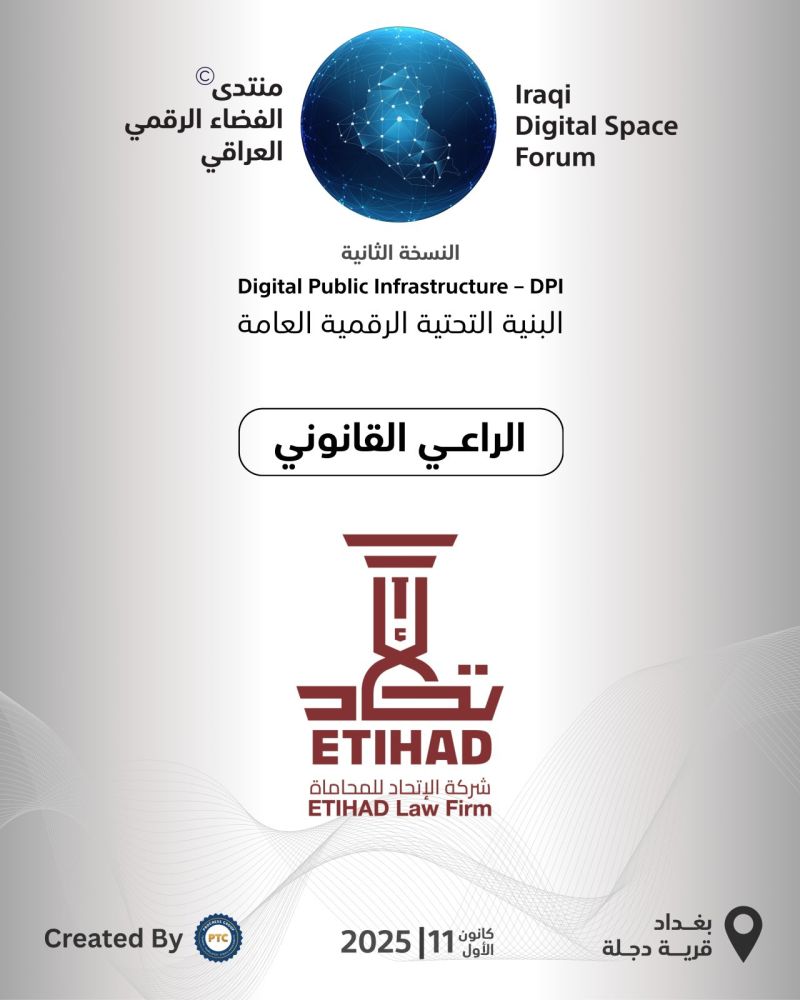
Iraqi Digital Space Forum We at Etihad Law Firm Ltd are proud to announce our participation as the Legal Sponsor of the Iraqi Digital Space Forum – Second Edition. Our sponsorship reflects our strong belief that a robust legal framework is essential for building Digital Public Infrastructure (DPI) and for supporting Iraq’s digital transformation journey. Through this partnership, we aim to contribute to a secure, modern, and forward-thinking legal environment that keeps pace with global technological advancements. We look forward to joining you in Baghdad – Dijla Village, December 2025, and working together to drive digital progress toward a brighter future.
Iraqi Arbitration Forum
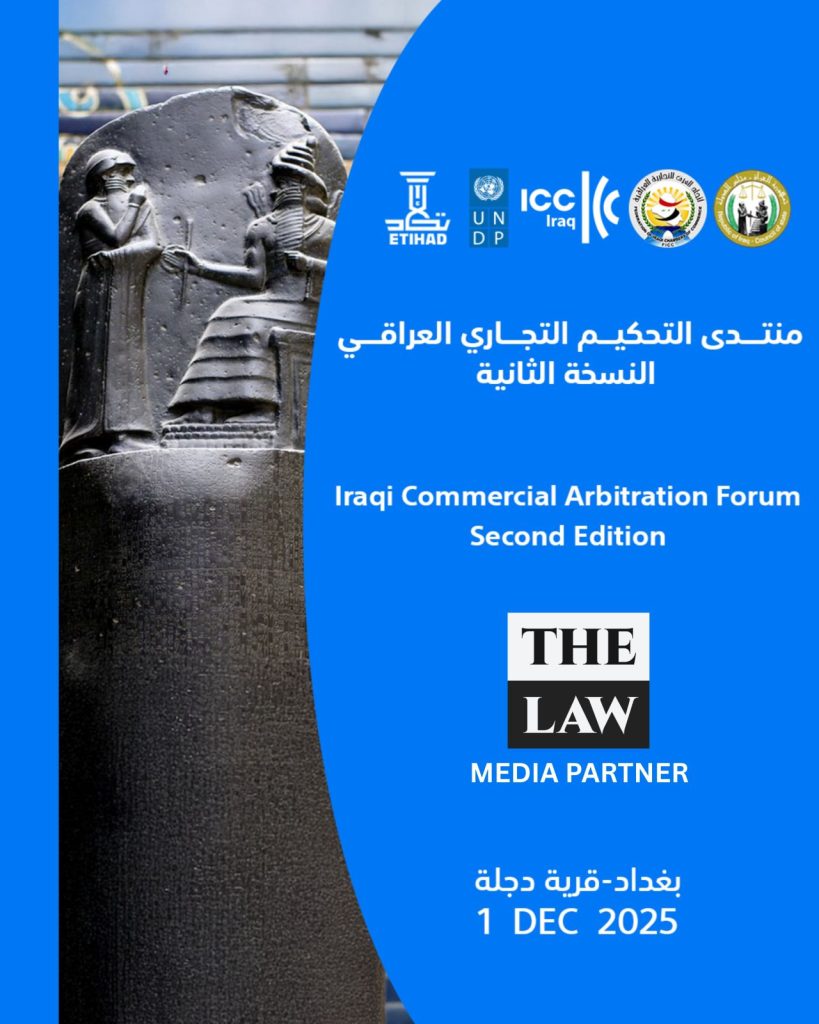
Iraqi Arbitration Forum A look back at the opening of the Iraqi Arbitration Forum – Second Edition, held on 1 December 2025 as the main activity of Iraqi Arbitration Week 2025. The Forum featured high-level institutional remarks and rich discussions on international commercial arbitration—marking an important step toward aligning Iraq with global standards and strengthening legal and commercial confidence. This event was made possible through the partnership of #FICC اتحاد الغرف التجارية العراقية – Federation of Iraqi Chambers of Commerce, the State Council, #ICCIRAQ , UNDP Iraq, Etihad Law Firm Ltd, with event management by PTC (Progress Group Limited) and THE LAW as media partner, and with valued support from the Supreme Judicial Council, the General Secretariat of the Council of Ministers, NIC, Ministry of Trade, Ministry of Planning, and ICC Arbitration Sincere appreciation to all partners, speakers, and institutions for contributing to this successful and forward-looking opening.
Iraq Britain Business Council
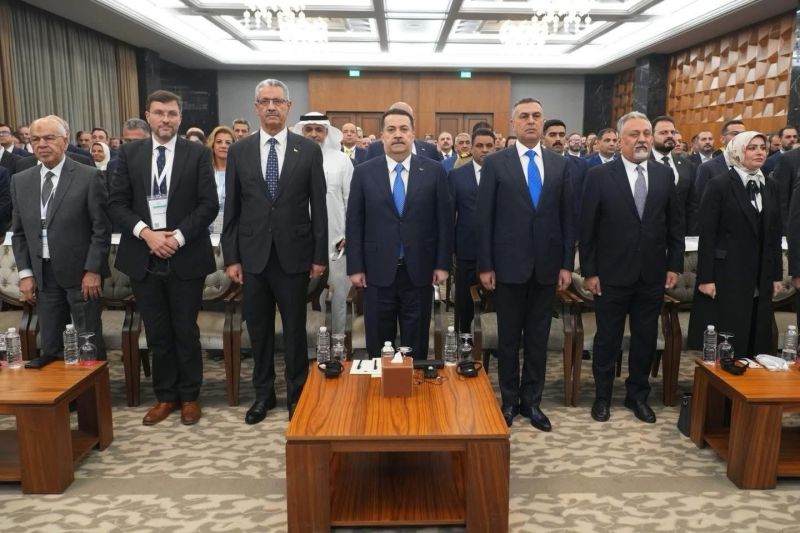
Iraq Britain Business Council Etihad law firm is proud to witness Iraq Britain Business Council #IBBC hold its first-ever conference in Iraq, hosted in Basra with the attendance of senior Iraqi and British leaders. Etihad Law Firm Ltd was pleased to participate and emphasize the vital role of legal services in enabling investment, supporting international companies, and strengthening governance and commercial confidence in Iraq. This milestone reflects the expanding partnership between Iraq and the global business community. Congratulations to IBBC and all partners on this significant achievement.