
Free Zone Iraq

Free Zone & Investment Vehicle Establishment Iraq’s Free Zones offer foreign and domestic investors a favorable business environment with customs, tax, and regulatory incentives to support trade, industrial activities, and service operations. Companies established in Free Zones may operate with increased flexibility in import/export activities, and can serve both regional and international markets. Legal Framework Free Zones in Iraq are regulated by the Free Zones Law No. 3 of 1998 and its implementing regulations, under the supervision of the General Commission for Free Zones. The law permits full foreign ownership, profit repatriation, and simplified procedures for licensing and project registration. Permitted Activities Trade and commercial activities Import and export operations Warehousing and logistics Industrial and manufacturing projects Maintenance and repair operations Service and consulting activities Establishment Requirements Submit an application for project approval Provide business plan or activity description Register the company or branch entity Obtain zone-specific operating license Open local bank account (when required) Comply with security and customs regulations Customs & Trade Treatment Goods entering the Free Zone are not subject to customs duties unless released into Iraq’s local market, in which case standard customs tariffs apply. Goods exported outside Iraq may leave without customs duties. Investor Considerations Type of activity (industrial, commercial, service) Licensing requirements Customs interaction for dual-market operations Payroll and staffing needs (local vs foreign) Zone infrastructure and logistics capabilities How Etihad Can Assist Etihad provides legal and regulatory advisory services to banks, financial institutions, and businesses, supporting compliance with applicable laws, regulations, and regulatory guidance issued by any competent authorities.
Establishing Companies – Oil & Gas

Establishing Companies for Oil & Gas The establishment of companies operating in the oil and gas sector in Iraq is governed by the Iraqi Companies Law No. 21 of 1997 (as amended) and subject to additional sector-specific regulations issued by the Ministry of Oil and its affiliated national oil companies. Oil and gas activities are treated as strategic activities and therefore require special approvals, technical qualifications, and compliance with Iraqi licensing procedures. Legal Basis & Regulatory Authorities Company Establishment (Corporate Law) Foreign companies may register a branch or incorporate an LLC Local companies may operate as LLC or JSC Registration occurs with the Registrar of Companies Social Security and Tax Authority registrations are mandatory post-establishment Sector Licensing & Approvals (Oil & Gas Law & Ministry Regulations) Ministry of Oil Basra Oil Company (BOC) North Oil Company (NOC) Oil Projects Company (SCOP) Iraqi Drilling Company (IDC) Companies performing technical or operational activities must obtain approval to perform work with these national oil companies (NOCs) and may need to be listed in their Approved Vendor Lists. Sector-Specific Regulatory Requirements ✔ Licensing & Qualification Technical capability and experience evidence HSE certifications (ISO, IADC, OSHA when applicable) Iraqi staff employment commitments Space & logistical capability in Iraq ✔ Commercial Registration Obligations General Commission for Taxes General Social Security Department Chamber of Commerce Ministry of Oil (for technical approvals) when applicable ✔ Local Content Requirements Companies must employ Iraqi nationals in certain roles Training & capability programs may be requested Certain subcontracting may require Iraqi participation Common Activities Authorized Under Iraqi Regulation EPC contracting Well drilling & services Oilfield services & maintenance Field logistics & chemical supply Engineering & technical consultancy HSE & training services How Etihad Can Assist Etihad provides legal and regulatory advisory services to banks, financial institutions, and businesses, supporting compliance with applicable laws, regulations, and regulatory guidance issued by any competent authorities.
Ongoing Corporate Compliance
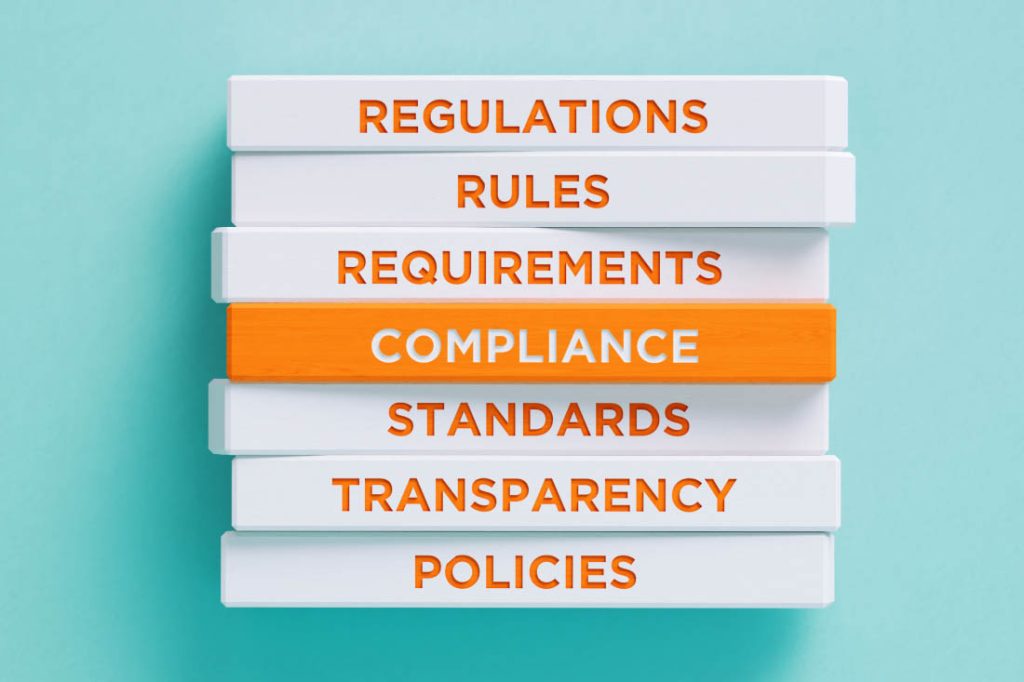
Ongoing Corporate Compliance & Reporting Requirements Companies in Iraq must maintain ongoing compliance with reporting, tax, employment, and corporate governance requirements. Proper compliance reduces legal and financial risk, supports credibility, and ensures readiness for audits or inspections. Compliance Areas Annual shareholders’ and board meetings Financial statements and audit reports Tax filings and declarations Social security and payroll reporting Contractual and sector-specific reporting Renewal of licenses or registrations Benefits of Compliance Management Avoids penalties and operational disruption Supports business continuity and tender eligibility Enhances investor and customer confidence Facilitates market expansion and financing How Etihad Can Assist Etihad provides legal and regulatory advisory services to banks, financial institutions, and businesses, supporting compliance with applicable laws, regulations, and regulatory guidance issued by any competent authorities.
Capital Increases of Corproates

Capital Increases Under Iraqi Companies Law No. 21 of 1997 (as amended), companies may increase their capital to onboard new investors, strengthen financial capacity, expand operations, or meet regulatory or contractual requirements. Capital increases require corporate approvals, amendments to registration documents, and filings with the Iraqi Registrar of Companies. Legal Procedures Shareholder Resolution approving the capital increase Amendment of the Articles of Association to reflect the new capital value and share allocation Subscription and Payment of the new capital by existing shareholders or new investors Submission to the Registrar of Companies for approval and registration Issuance of Updated Corporate Documents showing the amended capital Publication Notice for transparency and third-party notification Tax and Social Security Updates reflecting the amended capital for compliance purposes Strategic Reasons Funding expansion or new projects Satisfying regulatory capital adequacy requirements Onboarding strategic investors or joint venture partners Restoring capital adequacy after losses Preparing for mergers, listing, or restructuring events How Etihad Can Assist Etihad provides legal and regulatory advisory services to banks, financial institutions, and businesses, supporting compliance with applicable laws, regulations, and regulatory guidance issued by any competent authorities.
Corporate Mergers & Acquisitions

Corporate Mergers & Acquisitions Mergers and acquisitions (M&A) are strategic transactions used to expand market presence, enter new sectors, acquire capabilities, or consolidate ownership. In Iraq, M&A deals require corporate approvals, regulatory filings, and comprehensive legal and financial due diligence to ensure compliance with Iraqi law and alignment with investor objectives. Types of Transactions Share acquisitions (purchase of shares in an existing entity) Asset acquisitions (purchase of discrete business assets or operations) Statutory mergers or consolidations Corporate transformations (change of legal form to enable M&A) Divestitures or carve-outs of business lines Group-level restructurings for ownership consolidation Key Drivers Market expansion and competitive positioning Vertical or horizontal integration Succession planning and ownership transition Foreign investor entry into the Iraqi market Access to technology, supply chains, or skilled labor Private equity and institutional investment activity Legal and Regulatory Considerations Corporate approvals under the Iraqi Companies Law No. 21 of 1997 (as amended) Sector-specific approvals for regulated industries (e.g., banking, insurance, telecom, oil & gas) Share transfer procedures and updating of shareholder registers Tax and social security implications of share or asset transfers Employment transfer and labor law compliance where applicable Due diligence typically covers: Corporate governance and ownership Regulatory licenses and approvals Financial and tax compliance Contractual liabilities Employment and social security Litigation and dispute exposure How Etihad Can Assist Etihad provides legal and regulatory advisory services to banks, financial institutions, and businesses, supporting compliance with applicable laws, regulations, and regulatory guidance issued by any competent authorities.
Commercial Agency in Iraq

Commercial Agency The commercial agency regime in Iraq originally operated under Commercial Agency Law No. 51 of 2000. In 2017, Iraq issued Law No. 79 of 2017, which introduced significant amendments to modernize commercial representation, address market competition, and regulate foreign principals engaging in the Iraqi market through agents or distributors. Changes Introduced by Law No. 79 of 2017 Registration Requirement Reinforced: The amendment strengthened the mandatory registration of commercial agencies with the Ministry of Trade’s Commercial Agency Register. Unregistered agencies may face restrictions related to: Customs clearance Importation rights Enforceability of commercial claims Recognition of Wider Agency Forms: The amendment expanded the scope to cover: Exclusive and non-exclusive representation Distribution and dealership models Commission agencyThis aligned the law with modern commercial distribution practices. Foreign Principal Compliance: Foreign manufacturers or suppliers appointing Iraqi agents must now provide: Authorization letters Contract documentation Corporate evidenceLegalization/attestation procedures were reinforced to ensure authenticity. Contractual Clarity & Termination Rights: The amendment introduced stronger requirements for: Written agency agreements Termination procedures Compensation or settlement mechanisms where applicable Termination without legitimate cause may expose principals to claims depending on contract structure. Consumer & Warranty Obligations: Law No. 79 clarified the agent’s responsibility for: After-sales service Warranty support Spare parts and technical servicing (where applicable) These obligations are especially relevant for high-risk sectors (automotive, industrial, medical, oilfield equipment). Competition and Market Protection: The amendment aimed to prevent: Market dominance through exclusive dealings without justification Parallel import conflicts Abuse of exclusive distribution systems Regulatory authorities may intervene where competition concerns arise. Record-Keeping and Disclosure: Agents are now required to maintain updated commercial records to facilitate: Taxation Customs audits Consumer protection investigations Practical Implications for Foreign Companies Foreign suppliers entering Iraq should: Ensure agency contracts are legally compliant Legalize documentation for registration Address termination compensation clauses contractually Clarify exclusivity, pricing, and warranty responsibilities Failure to properly register may result in: Disputes with customs Enforcement limitations Unofficial distribution channels (parallel imports) Regulatory scrutiny How Etihad Can Assist Etihad provides legal and regulatory advisory services to banks, financial institutions, and businesses, supporting compliance with applicable laws, regulations, and regulatory guidance issued by any competent authorities.
Foreign Market Entry in Iraq
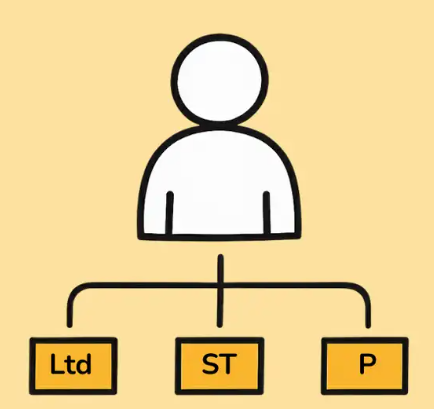
Foreign Market Entry in Iraq Foreign companies entering the Iraqi market must structure their operations in compliance with Iraqi Companies Law No. 21 of 1997 (as amended) and sector-specific regulations applicable to banking, oil & gas, telecom, insurance, and other regulated activities. Market entry can be achieved through several legal and contractual mechanisms depending on commercial strategy, risk allocation, and regulatory requirements. Market Entry Models Branch Registration of a Foreign Company: Foreign companies may register a branch to execute contracts or operate long-term projects in Iraq. Under Iraqi law: A branch may only be registered after obtaining a contract award, governmental approval, or project justification Branches are subject to: Registrar of Companies registration Tax Authority registration Social Security registration Sectoral licensing (when relevant) Branch profits are taxable and require a final tax settlement at project closeout Branches are commonly used for EPC, oil & gas, engineering, construction, defense, and telecom-related operations. Incorporating a Local LLC in Iraq: Foreign investors may incorporate a Limited Liability Company (LLC) with: 49% foreign ownership and 51% owned by Iraqi shareholder Minimum shareholder: 2 shareholders Corporate approvals issued by the Registrar of Companies LLCs are used for: Long-term service operations Local distribution and commercial agency Oilfield support services Logistics, contracting, and industrial projects After establishment, the LLC must register with: Tax Authority Social Security Chamber of Commerce Sectoral regulators (if required) Joint Venture Companies with Iraqi Participants: Foreign companies may form a joint venture with an Iraqi partner for: Market access advantages Regulatory requirements (sector-dependent) Local content compliance (especially in oil & gas and tendering) JV structures may be: Contractual JV (unincorporated) Equity JV (incorporated LLC or JSC) Corporate governance, profit distribution, and exit provisions are typically defined in JV agreements. Commercial Agency & Distribution: Under Commercial Agency Law No. 79 of 2017, foreign companies may appoint Iraqi agents for: Distribution Sales representation After-sales and warranty support Agencies must be registered with the Ministry of Trade – Commercial Agencies Registry and require legalized foreign principal documentation. This model is common for: Industrial equipment Automotive products Oilfield tools and consumables Medical and pharmaceutical products Consumer goods Free Zone & Special Zone Presence: Under Free Zones Law No. 3 of 1998, investors may establish companies or branches in Iraq’s Free Zones for: Customs-free import/export activities Warehousing and logistics Light industrial operations Goods entering Iraq’s domestic market are subject to customs duties, while goods exported abroad remain exempt. Strategic Considerations Depending on sector, foreign companies may require approvals from: Ministry of Oil (oilfield services, EPC, drilling) Central Bank of Iraq (banking & fintech) Communication & Media Commission (telecom) Insurance Diwan (insurance activities) Standardization & Quality Control (industrial imports) Ministry of Health (medical & pharma) Ministry of Interior (security services) Tax & Social Security Integration Income tax under Income Tax Law No. 113 of 1982 (as amended) Withholding taxes on foreign services Social security contributions for Iraqi and foreign employees Tax clearance upon contract completion or entity dissolution How Etihad Can Assist Etihad provides legal and regulatory advisory services to banks, financial institutions, and businesses, supporting compliance with applicable laws, regulations, and regulatory guidance issued by any competent authorities.
Shareholder Structures – Iraqi Companies

Shareholder Structures in Iraqi Companies Shareholder structures define ownership percentages, voting power, distribution rights, and governance participation within companies operating in Iraq. Under Companies Law No. 21 of 1997 (as amended), shareholder arrangements are reflected in the company’s Articles of Association, shareholder registers, and contractual agreements between partners. Elements of Shareholder Structuring Share ownership percentages and classes Voting rights and decision-making thresholds Board representation and management authority Dividend and profit distribution rights Minority protection mechanisms Share transfer rules and pre-emption rights Exit and buyout mechanisms between shareholders Purpose and Legal Benefits Reduces ownership and governance disputes Protects investor and minority shareholder rights Clarifies authority over corporate decisions Facilitates continuity in succession and transfer situations Supports regulatory compliance during share transfers or restructuring How Etihad Can Assist Etihad provides legal and regulatory advisory services to banks, financial institutions, and businesses, supporting compliance with applicable laws, regulations, and regulatory guidance issued by any competent authorities.
Joint Ventures Under Iraqi Law

Joint Ventures Under Iraqi Law Joint ventures (JVs) are a common market entry structure in Iraq used to combine local capabilities with foreign technical, financial, or operational expertise. JV arrangements are governed by Iraqi Companies Law No. 21 of 1997 (as amended) and may be formed as either an incorporated company or a contractual collaboration depending on the project and regulatory requirements. Types of JV Models Incorporated Joint Ventures (Equity JV): Under Iraqi corporate law, foreign and Iraqi partners may establish a jointly owned company, typically in the form of: Limited Liability Company (LLC), or Joint Stock Company (JSC) (used for large or strategic projects) Key characteristics: Equity ownership is defined in the Articles of Association Shareholders enjoy voting rights, dividend entitlements, and exit rights Entity registers with: Registrar of Companies Tax Authority Social Security Sector regulators (if required) Fully operational legal personality with contracting capacity Equity JVs are common in long-term oilfield services, industrial operations, construction, and public-private project models. Contractual Joint Ventures (Unincorporated JV): Contractual JVs are legally recognized cooperation agreements where parties collaborate without forming a separate company. Under Iraqi practice, these agreements: Allocate roles, revenue shares, and liabilities Do not create a separate legal entity Are often used for bidding or executing specific tenders Contractual JVs are widely used in: EPC and construction tenders Oil & gas service contracts Project-specific partnerships Government procurement participation Foreign Partner Participation: Foreign companies may participate in Iraqi JVs through: Equity contribution to an Iraqi company Branch registration for direct contracting Technical cooperation agreements Consortium bidding structures Foreign ownership is permitted except in sectors with special regulatory restrictions. Legal and Regulatory Considerations Companies Law No. 21/1997 (as amended) Tax Law No. 113/1982 (as amended) Social Security Law Sector-specific licensing rules (e.g., oil & gas, telecom, banking, insurance) Depending on the sector, JV approval may also be required from: Ministry of Oil (oilfield services & EPC) Communications & Media Commission (telecom licensing) Central Bank of Iraq (banking/fintech) Insurance Diwan (insurance sector) Ministry of Trade (commercial agency overlap) Governance & Shareholder Arrangements Iraqi JV partners typically negotiate: Board representation Voting thresholds Reserved matters Dividend policies Technical support and IP arrangements Local content commitments Exit and share transfer mechanisms Such provisions may be recorded in a Shareholders’ Agreement in addition to the Articles. JVs are frequently adopted in: Oil & gas field services and EPC contracts Infrastructure and construction projects Manufacturing and industrial operations Telecommunications and IT services Public procurement and PPP arrangements How Etihad Can Assist Etihad provides legal and regulatory advisory services to banks, financial institutions, and businesses, supporting compliance with applicable laws, regulations, and regulatory guidance issued by any competent authorities.
Company Liquidation Under Iraqi Law

Company Liquidation Under Iraqi Law Company liquidation in Iraq is governed by Companies Law No. 21 of 1997 (as amended) and involves the legal process of winding up a company, settling debts, liquidating assets, and removing the entity from the corporate register. Liquidation ends with the dissolution of the company, closure of tax and social security files, and issuance of a final strike-off decision. Legal Procedures for Liquidation Shareholder Resolution approving liquidation and appointing a liquidator Notification to the Registrar of Companies Liquidator’s inventory and valuation of assets Settlement of debts and creditor claims Tax Authority settlement and clearance Social Security settlement for employees Distribution of remaining funds to shareholders Submission of final liquidation report Company strike-off and dissolution Regulatory and Compliance Requirements Tax clearance is obtained from the General Commission for Taxes Social Security clearance is issued confirming employee settlements Customs clearances are completed for import-heavy operations (e.g., oil & gas, industrial) Sectoral approvals are obtained for regulated companies (e.g., banking, telecom, insurance) Reasons for Liquidation Market exit or restructuring Contract completion with no future operations Regulatory changes Group restructuring or consolidation Inability to meet financial obligations (leading to compulsory liquidation) How Etihad Can Assist Etihad provides legal and regulatory advisory services to banks, financial institutions, and businesses, supporting compliance with applicable laws, regulations, and regulatory guidance issued by any competent authorities.